Published in PLOS One on 2026-03-26, this study is presented as an attributed evidence briefing. The excerpts below are the original researchers’ words, reproduced under their Creative Commons Attribution licence. Health Signal has selected the abstract and, where needed, opening background paragraphs; the complete methods, results, limitations and references remain in the linked paper.
Original authors: Jacqueline M Lauer, Juha Pyykkö, Anthony Consigli, Mpela Chembe, Tamara Billima-Mulenga, Savanna Henderson, Doug Parkerson, Jukka M Leppänen, Lindsey M Locks, Günther Fink, Peter C Rockers
Source: PLOS One • DOI 10.1371/journal.pone.0339819
Read the complete primary study ↗ · Creative Commons Attribution licence
From the researchers
Abstract
Saccadic reaction time (SRT), an assessment of visual processing speed, may afford an accurate and unbiased measure of early childhood development (ECD). Few studies have examined SRT in low- and middle-income countries (LMICs), including its drivers. We sought to identify predictors of SRT as well as to assess the correlation between SRT and concurrent measures of ECD [Global Scales of Early Development (GSED) development-for-age Z-score (DAZ), height-for-age Z-score (HAZ), and head circumference-for-age Z-score (HCZ)], among young children in Lusaka, Zambia. We conducted a sub-study among 299 Lusakan children participating in a 2×2 cluster-randomized trial. SRT was assessed at ~31 months using a screen-based setup with a Tobii Pro Fusion tracker. Associations with household, caregiver, and child characteristics were assessed using univariable regression models; predictors significant at the p < 0.20 level were retained in a multivariable model. Pearson correlation coefficients were calculated to assess associations between SRT and other concurrent measures of ECD. In the multivariable model, characteristics found to be significant predictors of SRT included: being the only child <5 in the household at baseline (β: −10.02, 95% CI: −19.71, −0.33, p = 0.04), length-for-age Z-score (LAZ) at baseline (β: −3.17, 95% CI: −6.31, −0.04, p = 0.047), consuming ≥4 food groups in the past day (β: −10.42, 95% CI: −19.98, −0.86, p = 0.03), and having diarrhea in the past 2 weeks (β: 12.38, 95% CI: 0.71, 24.06, p = 0.04). SRT was significantly negatively correlated with HAZ (−0.176, p < 0.01) and HCZ (−0.132, p < 0.05), but not GSED DAZ. Overall, we identified several significant predictors of SRT among young children in Lusaka, Zambia, including birth spacing, baseline LAZ, dietary diversity, and diarrheal disease. Further research is needed, including in different age groups and geographic locations, to better understand the drivers of slow SRT, and poor ECD generally, in LMICs.
Introduction
Early childhood development (ECD), encompassing the physical, cognitive, motor, language, social, and emotional development of children in the early years of life, is associated with a myriad of positive health, economic, and social outcomes later in life [1]. It was previously estimated, using proxy measures of stunting and poverty, that 43% – ~ 250 million – of children <5 years of age in low- and middle-income countries (LMICs) were at risk of not reaching their developmental potential [2]. In 2015, ECD became part of the United Nations (UN) Sustainable Development Goals (SDGs) [3], underscoring the need for measurements of ECD that are feasible, reliable, valid, and comparable across countries. However, to date, quantification is challenging as there remains no established global standards for measuring poor ECD [4].
Reading this evidence
Use the full paper to check the study design, participant selection, comparator and outcome definitions before drawing a practical conclusion. An association does not by itself show cause and effect. A reported performance measure needs its denominator and uncertainty. A finding from a particular facility, sample or time period should retain that scope when it is discussed elsewhere.
This briefing makes the source accessible within the wider research & evidence desk. It does not assess an individual patient or certify a product. When considering relevance to another health system, examine the original authors’ account of context and limitations, then seek local implementation evidence. The related reporting below provides other studies to read alongside this one; it is a topic connection, rather than a claim that their results are directly comparable.
© 2026 Jacqueline M Lauer, Juha Pyykkö, Anthony Consigli, Mpela Chembe, Tamara Billima-Mulenga, Savanna Henderson, Doug Parkerson, Jukka M Leppänen, Lindsey M Locks, Günther Fink, Peter C Rockers. Excerpts reproduced under CC BY. Selection, formatting and contextual notes by Health Signal. The researchers are the authors of the source study, not members of Health Signal’s staff.
Explore connected evidence
- Evidence brief: Caregivers’ early stimulation behaviors on early child development outcomes in Northern Ghana
- Evidence brief: Spatial distribution and factors associated with co-occurrence of anemia and undernutrition among children aged 6–59 months in East Africa
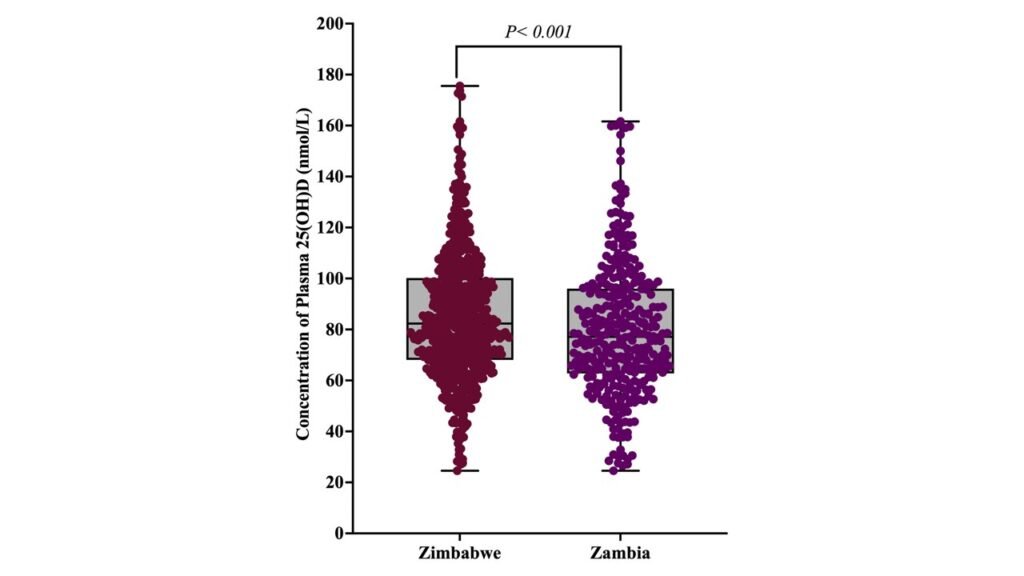
- Evidence brief: A cross‑sectional analysis of vitamin D status and associated factors in children recovering from severe acute malnutrition in Zambia and Zimbabwe